
-Photoroom_edited_edited.png)

The Dragon Boat Festival
On your marks, get set, go! This event has been celebrated for longer than 2000 years in China and has migrated thousands of miles to be celebrated by Chinese people around the world. Even here, in Hawai'i, thousands of people would come together and watch the races every year. But suddenly, the boats just vanished. What happened and will the Dragon Boats ever set sail in Hawai'i again? Read on to learn more about the event, its history in Hawai'i, and the promises made to revive a cornerstone event for the Chinese people on 'Oahu and across the state.
A Tradition Dating Back Thousands of Years
In China, the Dragon Boat Festival (traditional Chinese: 端午節; simplified Chinese: 端午节; pinyin: Duānwǔ jié; Cantonese Yale: Dyūnńgh jit), also known as the Double Fifth Festival, is a national holiday celebrated on the fifth day of the fifth month on the Chinese Lunar Calendar. It was the first Chinese holiday to be officially included on the UNESCO Representative List of the Intangible Cultural Heritage of Humanity, deeming this ancient festival an important enough cultural event to be preserved amongst humanity's long history of cultural treasures. So what is it, and why should we work so hard to preserve and celebrate the tradition in modern times?


Chinese Five Poisons amulet depicting a spider and toad. Coin on display in the Swedish Museum of Ethnography.
While there are several origin stories behind the holiday, it is widely believed that it is celebrated to get rid of misfortune and disease. According to Chinese cosmology, the fifth day of the fifth month is when yang energy is at its peak. It is the beginning of summer, and is when the five poisonous animals, the toad, the centipede, the scorpion, the snake, and the spider emerge, foretelling of disaster, infection, and blight. It also coincides with warmer weather which enhances natural bacteria growth in the environment. Insects also happen to breed during this season, increasing the natural spread of disease. All the extra humidity and
flooding also tends to harm crops leading to famine and weakness. All of these factors contribute to the belief that the human body is at its weakest during this time and there is extra need for protection from evil spirits, infection, and general malaise associated with the number five. To reclaim this day, people used this holiday as a day of purification, celebrating, and feasting to restore their good fortune and health.
Another major origin story of the Duan Wu Festival is the minister and poet, Qu Yuan. He is widely regarded as a hero and patriot during the Warring States period (340-278BC) who had been an advisor to the king of the Chu State. He expressed strong opposition to the king's decision to ally with the Qin State, accusing the king of treason, and was banished for it. 28 years after his banishment, the Qin State captured and destroyed the Chu State's capitol city. Qu Yuan wrote the elegy, Li Sao (Lament on the Encountering of Sorrow) and threw himself into the Miluo River (Hunan Province) where he drowned.
It is said that the locals, who revered Qu Yuan, took to their boats and raced to save him, but when they could not recover his body, they threw balls of rice, called zong zi, into the river so the fish would spare Qu Yuan's body and eat the rice instead.
The racing of the Dragon Boats is said to not only represent the peoples' race to save Qu Yuan, but also the struggle of the ancestors against calamity, ending with them carrying away the evil spirits that proliferate during this season.

In the modern day, as with most things, the Dragon Boat Races has largely become a commercialized holiday that is celebrated by Chinese people all over the world. As one of China's biggest three holidays, it's a widely celebrated opportunity for local businesses and societies to sponsor boats in the race, vendors to sell protective charms and herbal sachets, and restauranteurs to sell food, especially zong zi, or joong as the Cantonese of Hawai'i knows it.
Joong: A Dragon Boat Festival Staple
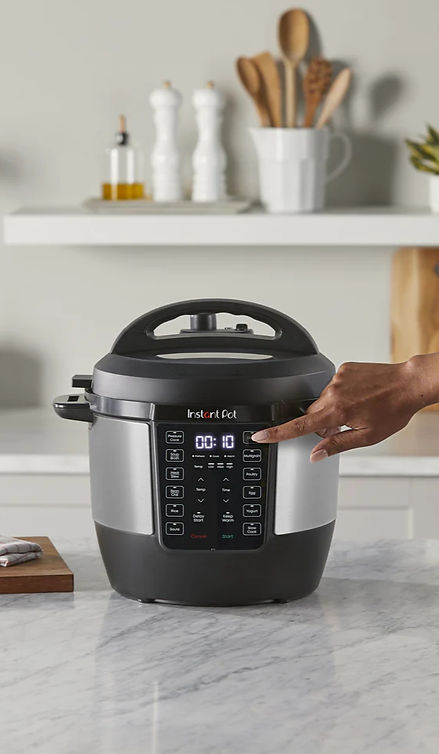
So let's focus on joong for a moment. We know it, we love it, we include it as part of our regular dim sum order. But for those of us who don't know, it is a ball of glutinous rice that sometimes includes a sweet or savory filling such as chicken, pork, lotus root, walnuts, or dates. It's usually steamed in a wrapping of either dried bamboo or lotus leaves in the shape of a quadrangle and often takes multiple days to make! The effort is worth it, but sadly, many modern day Chinese families have lost their ancestral recipes, preferring to buy it instead of spend the time to cook it at home. Such is the shame of modern society. But we also have technology on our sides so here's a recipe for joong that I conveniently found on the internet that uses the magic of an Instant Pot, that magical pressure cooking appliance that is helping to revive so many recipes for my own family that have been lost to time and capitalism.
Joong ala Instant Pot
Recipe courtesy of thewoksoflife.com
CONTAINS SOY AND PEANUTS.
ALWAYS BE MINDFUL OF PEOPLE WITH ALLERGIES AND COOK BATCHES SEPARATELY TO AVOID CROSS-CONTAMINATION.
Ingredients:
-
36 to 40 dried bamboo leaves (2 to 3 leaves per joong)
-
5 cups uncooked short grain sticky rice (also called glutinous rice, or “sweet rice”)
-
2 tablespoons light soy sauce, plus 2 teaspoons
-
2 teaspoons salt, plus 1/2 teaspoon
-
2/3 cup of raw peanuts
-
1 pound pork belly, cut into 12 equal pieces
-
1/2 teaspoon sugar
-
2 teaspoons shaoxing wine
-
1/2 teaspoon ground white pepper
-
1 teaspoon oil
-
½ cup water
Optional fillings:
-
6 salted duck egg yolks
-
3 Chinese sausages (lup cheong)
To prepare the leaves:
-
36 to 40 bamboo leaves (use 2 to 3 leaves per joong)
First, soak the leaves overnight. The next day, wash and rinse each leaf front and back, keeping them in a large bowl or tub of water until wrapping time so they don’t dry out.
To prepare the sweet rice:
-
5 cups of short grain sweet rice
-
2 tablespoons light soy sauce
-
2 teaspoons salt
Soak the sweet rice overnight. The next day, drain completely in a colander. Mix the soaked, uncooked rice with light soy sauce and salt in a large bowl and set aside.
To prepare the peanuts:
-
2/3 cup of raw peanuts
Soak the peanuts overnight. The next day, boil for 5 minutes, drain, and set aside.
To prepare the pork belly:
-
1 pound pork belly, cut into 12 equal pieces
-
2 teaspoons light soy sauce
-
1/2 teaspoon sugar
-
2 teaspoons shaoxing wine
-
1/2 teaspoon salt
-
1/2 teaspoon ground white pepper
-
1 teaspoon oil
-
1/2 cup water
In a bowl, toss the pork belly with the light soy sauce, sugar, shaoxing wine, salt, and white pepper. Marinade overnight. The goal of this step is to make the pork belly slightly too salty, because the rice will absorb the excess salt, giving the zongzi its distinctive savory, umami flavor.
Heat the oil in a wok over medium heat. Cook the pork belly for a few minutes before adding the water. Cover the wok with the lid, and cook for 5-10 minutes until the liquid is gone. Remove from the wok and let cool.
Wrapping:
Use 3-4 leaves per and cut off the bottom half inch where the stem is the thickest. Form the bottom into a cone and fill with some rice, layer in the fillings, and top the cone with more rice. Fold the leaves over to close the pouch and pinch the leaves at the top. Fold the top half of the leaves over and cut off any excess. Wrap the bundle tightly with twine and tie off with a knot. It sounds easy but requires practice to get the iconic quadrangular shape.
Cooking:
Pack the joong tightly and in layers until the max fill line is reached. Fill with water to the max fill line or 2 inches above your joong if doing in small batches. Cover the Instant Pot and lock the lid in place. Set on manual high pressure for 1 hour +/- 10 minutes depending on how sticky you like it, and allow the pressure to release naturally. Be sure all pressure is released before safely opening the lid. What used to take 7-8 hours now takes 1!

The Dragon Boat Festival and Hawai'i: A Tradition Lost
'Oahu, the island known as The Gathering Place, definitely lives up to its name. It has the largest population of the main islands and is home to one of America's oldest Chinatowns. Hawai'i's Dragon Boat Race was once an annual tradition that was sponsored by the Chinese Chamber of Commerce and other businesses and societies who helped orchestrate the event, maintained the boats, and raced them. The last Dragon Boat Race was held on July 27, 2019 and has not been seen since. The race used to take place at Ala Moana Beach Park and was attended by thousands of spectators from the outer islands and beyond.
So what happened? In short, COVID-19 happened. Disease and infection: the very thing that the festival is designed to reclaim and protect against, shut down many businesses, events, and gatherings. The lockdown started in February 2020 and the world hasn't been the same ever since.
Today, in 2026, the pandemic left its mark, but the planet continues its march around the sun. Mask use is still in effect. People get nervous in crowded situations. But for the most part, the majority of our lives has returned to the rhythms we were used to before COVID shut down the world. But here in Hawai'i, our Dragon Boats haven't raced across Ala Moana since then due to a lack of interest. How's that? An event once sponsored by the biggest names in Hawai'i has died. There was one try in 2022 at bringing it back, where societies were invited to build their own "boats" in A'ala park, but the race took place on land. It seems tragic and so ironic that a festival meant to bring good luck and health in the face of disease and disaster has, itself, succumbed to a global pandemic.
It's not going to be easy to revive this monster festival either, but the societies are trying to give it a shot at revival, including OSGL! And it takes so many volunteers (a whole village, you might say) to put on a great event, not just paddlers! We can't claim to love joong and deny the one holiday that celebrates it! Let's shake off the ennui that the pandemic plagued us with and bring back an event that is considered one of China's top three, and is so worthy of UNESCO's recognition as one of the world's intangible cultural treasures that deserves to be preserved and celebrated! Those boats deserve to see the water once again!
If you'd like to show your support, shoot us a message below, raise your hand at the next meeting, and let's show Hawai'i what this village is made of!

Sources:
-
Anonymous, Dragon Boat Festival, Wikipedia. <https://en.wikipedia.org/wiki/Dragon_Boat_Festival> Retrieved 23 January 2026
-
Hawaii Dragon Boat Festival [@dragonboathi] Hawaii Dragon Boat Festival is this Saturday at Ala Moana Beach Park!! One of the most unique DB course locations... 26 July 2017, Instagram. <https://www.instagram.com/p/BXCTSTYgEaw/?utm_source=ig_web_copy_link&igsh=MzRlODBiNWFlZA==> Retrieved 24 January 2026
-
Jiang, Ying, Explainer: Everything You Need To Know About Dragon Boat Festival, Xi'an Jiaotong - Liverpool University. <https://www.xjtlu.edu.cn/en/news/2021/06/everything-you-need-to-know-about-dragon-boat-festival> Retrieved 23 January 2026
-
Koon, Wee Kek, Reflections: Qu Yuan, Chinese Patriot Whose Death Is Said To Have Inspired Dragon Boat Festival Customs, South China Morning Post. <https://www.scmp.com/lifestyle/chinese-culture/article/3312392/qu-yuan-chinese-patriot-whose-death-said-have-inspired-dragon-boat-festival-customs> Retrieved 24 January 2026
-
Leung, Judy, Cantonese-Style Zongzi (Rice Dumplings), The Woks of Life: A Culinary Genealogy. <https://thewoksoflife.com/zongzi-cantonese-style/>
-
Leung, Judy, How to Cook Zongzi in and Instant Pot, The Woks of Life: A Culinary Genealogy. <https://thewoksoflife.com/how-to-cook-zongzi-instant-pot/>
-
Stepanchuk, Carol, The Chinese Festival Calendar and the Allure of the Double Fifth, The Journal of the International Institute. <http://hdl.handle.net/2027/spo.4750978.0015.105> Retrieved 23 January 2026
Images used are royalty-free, credited to one of the sources above, obtained from @dragonboathi on Instagram, or have been downloaded with permissions.